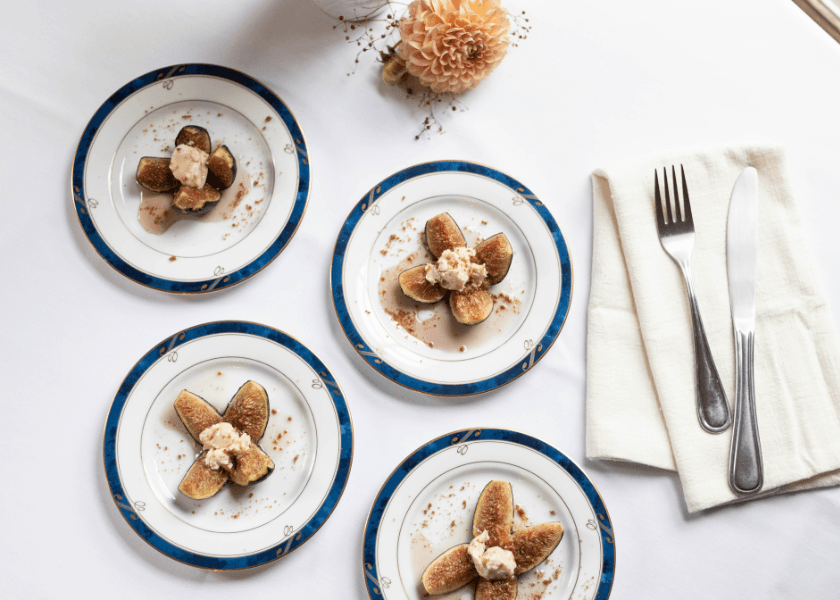
Late summer on the estate means one thing in the kitchen: the fig trees are producing, and we're putting every last one of them to good use. Figs have a longer, stranger history than most people realize, so before we get to the recipe, here's a little context for the fruit currently taking over our counters.
A Few Things You Probably Didn't Know About Figs
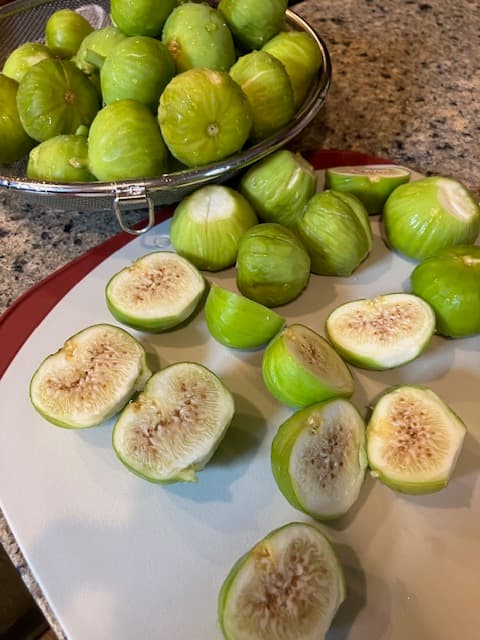
Fresh figs are often thought of as simple, honey-flavored treats, but there's more going on beneath that thin skin than most people realize.
Ancient survivors. Figs are estimated to have been around for roughly 80 million years, meaning they predate, and outlasted, the dinosaurs.
Inverted blossoms. A fig isn't technically a fruit in the traditional sense; it's a syconium, an inverted flower that blooms inside the pod. Those crunchy little "seeds" are actually the individual flowers.
A pollination partnership. Figs depend on a highly specialized wasp for pollination, one of the more unusual partnerships in the plant world.
Calcium champions. A half-cup of figs provides about as much calcium as a half-cup of milk, and ounce for ounce, figs pack more potassium than a banana.
The original forbidden fruit? Western art often depicts Eve's forbidden fruit as an apple, but many Jewish scholars and historians point to the fig instead. Michelangelo seemed to agree: on the Sistine Chapel ceiling, Adam and Eve cover themselves with fig leaves while holding a fig branch.
Eat the skin. Fresh fig skin is entirely edible (just give it a rinse first), and a good portion of the fruit's fiber and antioxidants live right beneath the peel.
Turns out there's a lot going on behind that quiet little fruit, and we happen to have a few of them growing right on the property.
Guest Favorite:
Agave Roasted Figs
This is the recipe we keep coming back to all season: five ingredients, twenty minutes, and a result that looks far more complicated than it is.
Ingredients (makes 6)
6 ripe figs, any variety
½ tsp agave per fig (honey or maple syrup work as substitutes)
½ tsp goat cheese or brie per fig
Gingersnap cookies, crushed, for garnish
Instructions
Heat oven to 350°F.
Destem and quarter each fig, leaving the base intact so it opens like a flower as it heats.
Line a muffin tin with silicone liners and set a fig in each cup.
Drizzle ½ tsp of agave into the cut sides of each fig.
Bake 10 to 15 minutes, depending on ripeness, until the agave and juices are bubbling.
Pulverize Gingersnap cookies in a food processor.
Remove from the oven and tuck a bit of goat cheese or brie into the center of each fig. Let sit a few minutes so the cheese softens.
Plate and finish with a sprinkle of crushed gingersnaps.
Serve warm, ideally with a glass of something local. It's the kind of small-batch recipe that turns a quiet evening on the estate into something worth slowing down for.
Taste Fig Season for Yourself
Our fig trees are producing right through late summer, and a stay at A' Tuscan Estate means you're welcome to see (and taste) the season firsthand. Check availability and book directly with us for the best rate.